Spice jars do more work than most people give them credit for. The right jars keep air, light and moisture away from your spices, make your collection easier to see and use, and turn a jumble of bottles into something that looks good on a shelf. The wrong ones let flavor fade quietly and make every meal a search.
This guide covers everything you need to know: glass versus tin versus plastic, which sizes to buy, the difference lids make, how shape affects storage space, and seven habits that help you store spices so they last.
The short answer
- Glass spice jars are the best all-rounder: easy to clean, no smells, good seal.
- Tins block light completely; plastic is light and shatterproof.
- Buy 4 oz jars for weekly spices and 2 oz jars for occasional ones.
- Square jars save space; shaker lids speed up daily cooking.
- Store spices cool, dark and dry, away from the stove.
Why your choice of spice jars matters
Ground spices and dried herbs are full of aromatic oils, and those oils are what give them flavor. Heat, light, air and moisture all break them down. A good spice jar slows that process. A poor one, like a loose lid or a clear jar on a sunny windowsill, speeds it up.
According to McCormick, most dried spices keep their best quality for one to a few years, with whole spices lasting longest. How you store spices has a big effect on where in that range yours end up. The spice shelf life chart lists 40 spices and how long each one stays at its best.
There’s a practical side too. Matching spice jars line up neatly, fit drawers and racks better, and make labels easy to apply in the same spot every time.

Materials compared
Glass
Glass is the most popular choice for spice jars, and for good reason. It doesn’t absorb smells or colors, so a jar that held turmeric can be washed and reused for cinnamon. It’s easy to clean, looks good and seals well with the right lid. The downside is that clear glass lets in light, so glass jars are best kept in a drawer or cabinet. Amber glass blocks more light if you want jars on open shelves.
Metal tins
Tins block light completely, which protects color and flavor. They’re light, stackable and often magnetic, which suits small kitchens. Look for food-safe tins with a tight lid. The main drawback is that you can’t see what’s inside, so clear labels matter even more. Many people use tins with a small window in the lid.
Plastic
Plastic spice jars are light, cheap and won’t break if dropped. They suit kitchens with young children and high shelves. Over time, plastic can absorb strong smells like cumin or curry powder, and it may stain from turmeric or paprika. Choose BPA-free plastic and keep a separate jar for each spice.
Ceramic
Ceramic jars look beautiful and block light, but they’re heavy, harder to label and usually larger than standard spice jars. They’re best for one or two everyday spices kept on the counter, like salt and pepper.
The glass vs tin vs plastic guide compares these materials in more depth, including which keeps spices freshest.

Choosing the right size
Bigger isn’t better with spice jars. A huge jar of a spice you use twice a year will lose its flavor long before it’s empty.
| Jar size | Holds roughly | Best for |
|---|---|---|
| 2 oz | A few tablespoons | Occasional spices, strong flavors |
| 4 oz | Half a cup | Most everyday spices and herbs |
| 8 oz | A cup or more | Salt, pepper, blends you use daily |
| Canister | Several cups | Bulk refills, flour, sugar |
A good rule: choose a size you’ll use up within a year. The spice jar sizes guide goes into more detail and shows which label sizes fit each jar.
Lids: shaker, sifter or plain?
- Shaker lids have small holes for sprinkling. They’re quick for salt, pepper, paprika and other spices you add by eye.
- Sifter lids combine shaker holes with a larger spoon opening, so you can choose.
- Plain lids suit spices you measure with a spoon, and whole spices like cloves and star anise.
- Cork or bamboo lids look lovely but may not seal as tightly. Fine for spices you use quickly.
Whatever the style, the seal matters most. A rubber or silicone ring inside the lid keeps air and moisture out.
Round or square?
Round spice jars are the most common and easiest to find. Square jars waste less space, because they sit flush against each other in drawers and on shelves. If you’re short on space, square jars can fit noticeably more spices into the same area. They also give you a flat front for labels.

Seven tips to store spices so they last
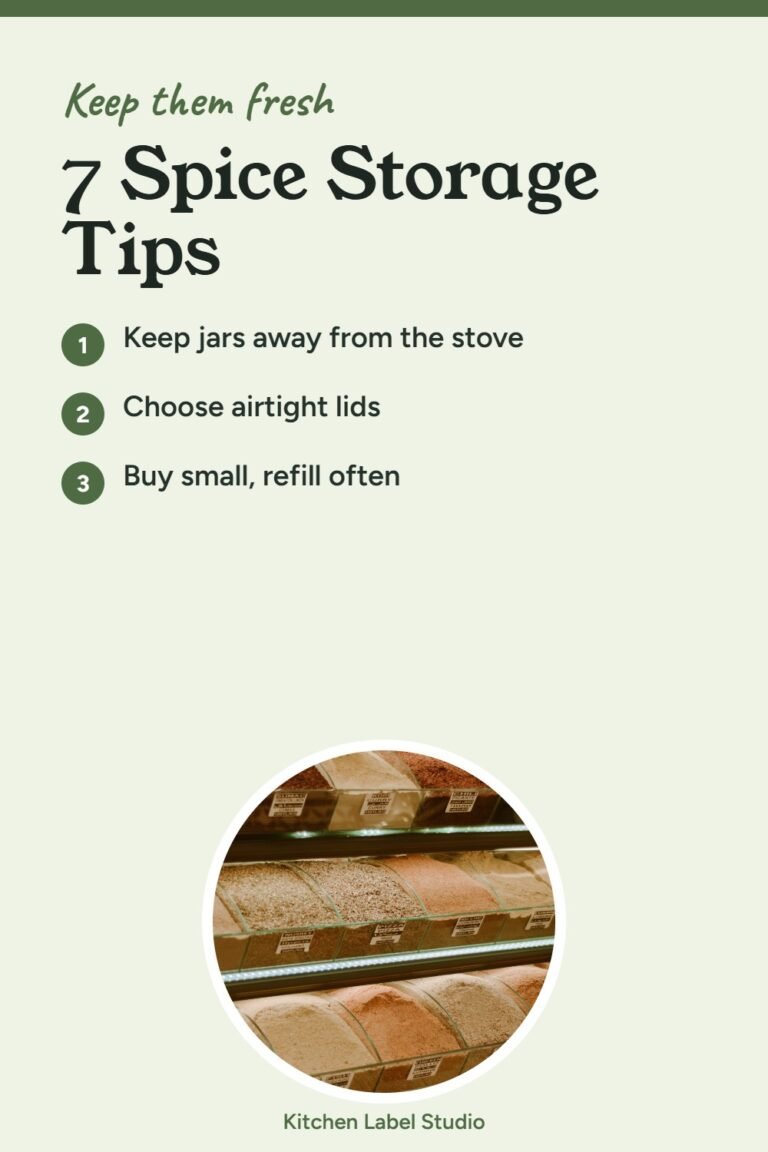
- Keep them away from the stove. Heat and steam fade flavor and cause clumping. A drawer or cabinet one step away is ideal.
- Keep them in the dark. Light, especially sunlight, fades color and aroma. Store glass jars in drawers or cabinets.
- Close lids tightly. Air slowly dulls spices. Put the lid back straight after using a jar.
- Keep them dry. Never shake spices straight into a steaming pot, because steam gets into the jar. Use a dry spoon instead.
- Buy small and refill often. Smaller amounts are used up while they’re still fresh.
- Don’t freeze them. McCormick doesn’t recommend freezing dried spices, because condensation forms when jars come in and out.
- Label with dates. A “best before” or “bought” date on each label tells you when to refresh.
Food safety experts at Texas A&M AgriLife Extension give similar advice: keep spices away from heat, light and moisture, and remember that “best by” dates are about flavor, not safety.
Labeling your spice jars
Once you’ve chosen your jars, labels finish the job. Every jar should have a label in the same style, in the same position, so you can scan a row at a glance. If jars live in a drawer, add a small label on each lid too.
With the free spice label maker you can pick a style, set the exact size for your jars and print a matching set, including a date line. The printable spice jar labels guide covers paper and printing tips.

Where to keep your spice jars
The perfect spot is cool, dark, dry and close to where you cook. In most kitchens, that’s a drawer or cabinet beside the stove. If space is tight, door racks and magnetic tins work well. The guide to organizing spices covers every option, from drawers to wall racks.
Refilling instead of replacing
Buying spices in bulk bags and refilling your jars saves money and packaging. Keep refill bags in the pantry with matching labels, and top up jars when they run low. Use the older spice first: pour what’s left in the jar into a bowl, add the fresh spice to the jar, then put the older spice on top so it’s used next.
Cleaning and reusing spice jars
Glass and metal spice jars can be used for years. Wash them in hot, soapy water, rinse well and let them dry completely before refilling, ideally overnight. Even a little moisture left inside can cause clumping. If you’re reusing jars that came with labels, the guide to removing old labels shows how to get rid of stubborn glue.
The right spice jars, stored well and labeled clearly, keep your spices tasting better for longer and make cooking simpler every day.
Frequently asked questions
Are glass or plastic spice jars better?
Glass is usually better. It doesn’t absorb smells or stains, it’s easy to clean and it seals well. Plastic is lighter and won’t break, which suits children’s kitchens and high shelves.
What size spice jar should I buy?
4 oz jars suit spices you use weekly. 2 oz jars suit spices you use occasionally, so they’re finished before they fade.
Should spice jars be airtight?
Yes. Air and moisture slowly dull flavor, so a lid with a good seal keeps spices fresher for longer.
Is it bad to keep spices above the stove?
It’s convenient but not ideal. Heat and steam from cooking make spices lose flavor faster and can cause clumping.
Should I freeze spices to keep them fresh?
McCormick doesn’t recommend it. Taking jars in and out of the freezer causes condensation, which can make flavor fade faster.
Save it for later
Pick your favorite pin and save it to your Pinterest board.